August 14, 2012
How the intricate network of blood vessels forms within the brain has long fascinated biologists. Though the human brain comprises only 2 percent of body weight it receives up to 15 percent of the cardiac output through this network, or vessel vasculature.
The vasculature in the human brain consists of a complex branching network of blood vessels, in total some several hundred miles in length. The network is formed so as to distribute blood efficiently to all brain regions, and abnormalities can lead to various neurological disorders, including strokes, learning difficulties and neurodegeneration. Yet our knowledge of just how the brain vasculature develops remains relatively limited.
Comparing pruned and unpruned blood vessels, it was apparent that blood flow decreased in vessels prior to the onset of pruning, and when the researchers artificially blocked blood flow in specific vessels this led to vessel pruning—whereas increasing blood flow inhibited pruning in the vessels concerned.
Read more at: http://phys.org/news/2012-08-insights-vascular-networks-fish-brains.html#jCp

13.8.12
Starting education early aids kids’ learning
If Smart Start-Centre County could have one lasting message, it would be that high quality learning experiences before age 5 are vital. From birth to age 5, the brain produces 700 synapses per second, while after age 5 no new circuits develop. We must capitalize on those first 5 years or bear the cost later. http://www.centredaily.com/2012/08/12/3296963/starting-education-early-aids.html
Second Language Learning at the Elementary School in the Westlake City School District
After a two-year process, the Westlake City School District will be offering second language learning at
our four elementary schools. The program’s purpose is to provide students with a foundation for future
learning of second and/or third languages. Our emphasis is not on one specific language, but rather
on the attainment of second language skills and the brain development benefit that results from this
emphasis; the nature of how it broadens cultural understanding and the fact that attaining a second
language has been shown to greatly increase the probability of expanding to further languages.
Students will learn sounds, sound combinations, vocabulary, and the inflections and nuances of the language taught at their school. This foundation will create new pathways for future language learning, making it easier for students to transfer skills and concepts learned in the elementary school to the language they later choose.
Philosophy on teaching a second language in grades 1-4
What do we want for our students?
We want our students to develop their capacity for second language attainment beginning at an early
age. Our emphasis is not on one specific language, but rather on the attainment of second language
skills and the brain development benefit that results from this emphasis; the nature of how it broadens
cultural understanding and the fact that attaining a second language has shown to greatly increase
the probability of expanding to further languages.
We know research supports that students are better able to speak and understand second, third and
fourth languages better when a foundation for bilingualism is built in the younger years. Research also
demonstrates that second language learning at an early age supports higher academic achievement,
provides cognitive benefits to students, and impacts their beliefs and attitudes about language learning
and other cultures.
http://beta.westlake.k12.oh.us/schools/ElementaryPDFs/Second%20Language%20Learning%20in%20Elementary%20School_Branding.pdf
9.8.12
Cambridge’s charters through 800 years of history.

In 1575 the Borough of Cambridge received a charter from Queen Elizabeth 1 granting the town its own coat of arms. The original charter carrying the coat of arms, which brings together many of the elements that make Cambridge distinctive, is still in the safekeeping of the Guildhall.
Cambridge’s coat of arms depicts a shield decorated by a bridge over a river with three sailing boats, their sails furled. The shield is topped by a castle and flanked by a pair of magnificent seahorses. Below the castle is a helmet from a suit of armour and above the bridge are two roses and a fleur-de-lis signifying Cambridge’s royal connections.
Along with an array of items telling the story of Cambridge as an important centre for local and regional government and an international seat of learning, the original 1575 charter will be shown to the public during a talk, The Civic Insignia and Historic Charters, at the Guildhall on Friday 7 September and Saturday, 8 September, 11am to 12.15pm.
Even earlier than the 1575 charter is the charter that granted the Borough the right to appoint its first Mayor. It was issued by King John and dates from 1207, several decades before the establishment of the first of the Cambridge Colleges, Peterhouse, in 1284.
The role of Sergeant-at-Mace in Cambridge goes back at least 600 years with the first Sergeant-at-Mace recorded in 1404. A mace is essentially a hand-held weapon designed to be used by a sergeant or constable in keeping the peace. As weapons, maces became redundant when the arrival of gunpowder saw the development of fire-arms. The mace then became primarily a ceremonial item symbolic of the power of the Mayor as the most important person in the Borough.
Cambridge acquired city status only in 1951. Once again, this was bestowed by a Royal Charter. The monarch who granted it was George VI, father of the present Queen, and the bells of Great St Mary’s church were rung in celebration.
4.8.12
What Americans Don’t Get About the Brain’s Critical Period
By Virginia Hughes | August 2, 2012 | 6 Comments
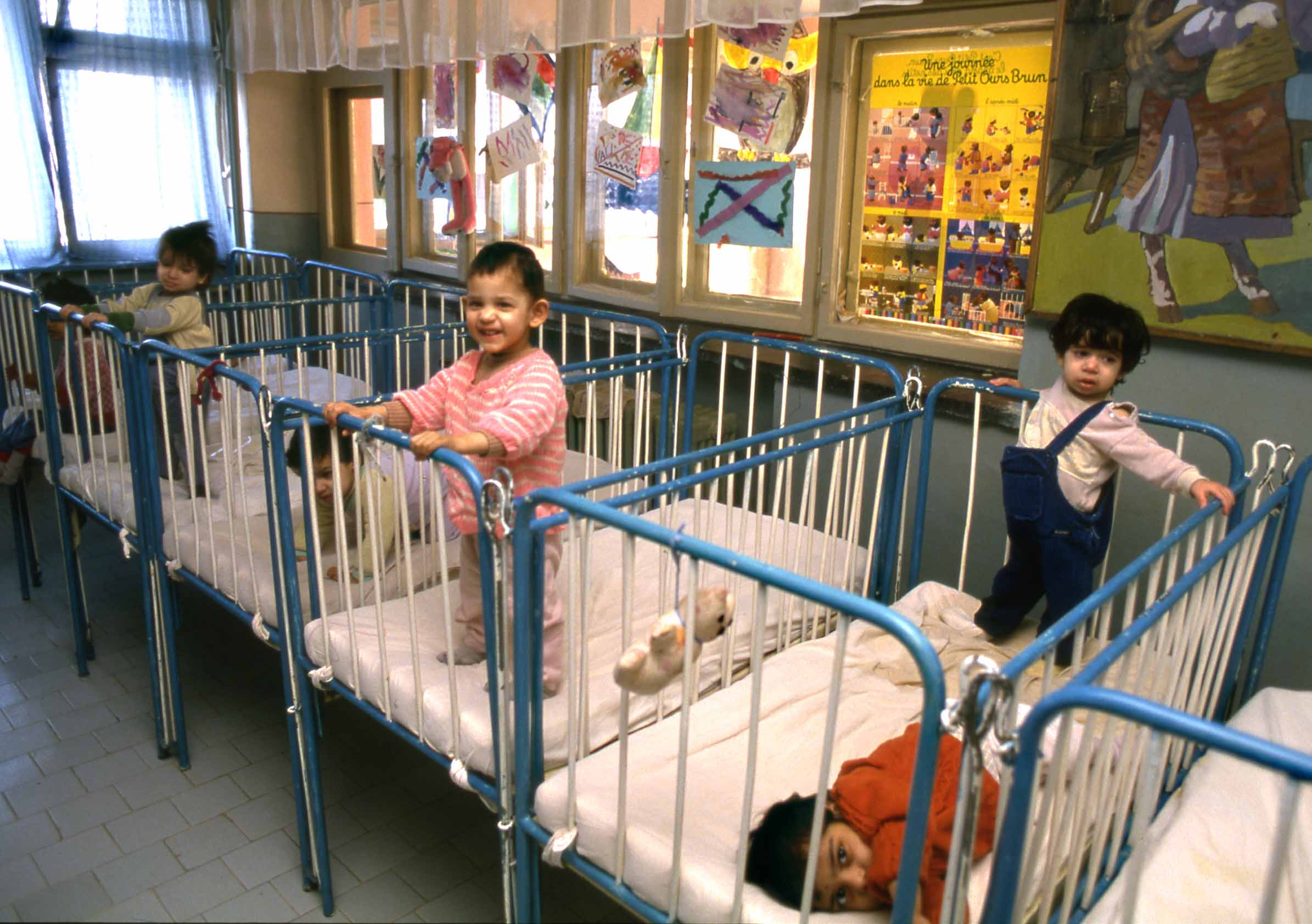
Toddlers living in a Romanian orphanage
On April 17, 1997, Bill and Hillary Clinton organized a one-day meeting with a long and lofty title: The White House Conference on Early Childhood Development and Learning: What New Research on the Brain Tells Us About Our Youngest Children.
The meeting featured eight-minute presentations from experts in public policy, education and child development, and one neuroscientist. They discussed, among other things, how 6-month-old infants learn to discriminate the sounds of their native language, and how, if a kitten’s eye is patched during early development — and therefore deprived of light inputs — it will go permanently blind in that eye, even after the patch comes off.
Two studies published in the past week, for example, have shown that children who experience to severe neglect, abuse, or injury in childhood (even after age 3, by the way) have abnormal brain wiring when they hit adolescence.
The first report, published by Nelson and his colleagues in the Proceedings of the National Academy of Sciences, was part of a 12-year study tracking the fates of 136 Romanian orphans, some of whom were raised in state-run institutions and others in foster care families. Around age 8, children who grew up in institutions have less white matter, the tissue that links up different brain regions, compared with those raised in families, the study found.
This idea is bolstered by the second new study, published yesterday in Neuropsychopharmacology. Researchers in Texas scanned the brains of adolescents who had experienced neglect or abuse before age 10. These kids had weaker white matter tracts in adolescence compared with peers who didn’t experience early adversity. What’s more, the adolescents with deficits in brain connectivity were more likely to be dealing with depression or substance abuse five years later.
3.8.12
National Scientific Council on the Developing Child WORKING PAPER #5
Beginning at birth, all children have the capacity to learn any of the
world’s languages. This ability is encoded in our genes and activated by
exposure to everyday conversation in an interactive way. Unless a child has a
specific disability, the achievement of fluency in any language, as well as the
mastery of more than one language at the same time, does not require formal
instruction or intervention in the early childhood years. It simply requires
ongoing communication with others. Moreover, the younger the brain, the greater
its capacity to master more than a single language. The Timing and Quality of Early Experiences Combine
to Shape Brain Architecture
http://developingchild.harvard.edu/index.php/resources/reports_and_working_papers/working_papers/wp5/
1.8.12
Unraveling the Mystery of Language Acquisition

Kara Morgan-Short.
Language is the portal to understanding other cultures....Hopefully this research will contribute to those efforts.
Her dissertation research examined whether adults need grammatical explanation of second-language forms or whether they do better learning in an immersion-type situation. “I needed to branch out into cognitive neuroscience and cognitive psychology in order get insight from those fields about how adults learn in general and to tap into techniques that neuroscientists use to actually look at the processes in the brain,” she explained.

LAS student and study participant Christian Alvarado gets fitted with electrode cap.
One of the neuroscience techniques is a cap studded with electrodes that allows Morgan-Short to detect ERPs (Event Related Potentials), which are electrophysiological signals measured from the scalp that reflect brain processes. ERPs can be used as indicators of how the brain is responding to learning—for example, past tense in English or new vocabulary.
“The question of grammar-based versus immersion-type teaching is centrally what my studies are still trying to determine,” said Morgan-Short. For a recent study, she and her team created an artificial second language that is “consistent with a real language and affords complete control over aspects of the language such as the pronunciation of the words so that study participants can focus on learning the vocabulary and grammar.
“There are some interesting results: The group that learned the artificial language with grammatical explanation learned it with approximately 90% proficiency rates. The immersion-based technique group learned it just as well, but also showed brain responses similar to what native speakers show when using their language of origin.”

Alvarado in electrode cap.
“There are several different kinds of cognitive abilities. It has been suggested that IQ plays a role in second-language acquisition. That appears to explain language learning at low levels of proficiency, but not higher levels of proficiency; IQ does not seem to predict who becomes fluent with ease. Some people have looked at working memory—the ability to hold and process information in your mind. We look at and measure both of those. We also measure declarative memory—the ability to remember new facts—and procedural memory—the ability to pick up sequences and patterns. Basically, declarative memory is knowledge about what and procedural memory is knowledge about how. Recent models have suggested that declarative memory and procedural memory play a role in language both in native speakers and second-language learners.
“Ultimately the larger theoretical goal is to learn how the mind works. But the research has more immediate, real-world applications. While it would be impractical to implement in a classroom, you could collaborate with computer scientists to develop computer applications in which you screen for the learning-style profile and then go through instruction type A or B on the computer exercises, providing students with customized learning tools to enhance their classroom experience.”
While second-language fluency is a wonderful personal enhancement that increases one’s ability to fully experience literatures, cultures and world travel, Morgan-Short emphasizes the importance of language skills in the business and political arenas. “A friend in bank financing is learning French because he works with the French financial system and he needs to have proficiency to do his job better. If you could customize the learning process it would be far more efficient, particularly for busy adults with career-specific goals,” she said. “There’s a statistic out from the state department that only a fourth of those in the Foreign Service really have adequate proficiency to do their job. Language is the portal to understanding other cultures. In order for the U.S. to do the best work we can in international relations, we are going to have to learn to communicate. Hopefully this research will contribute to those efforts.”
訂閱:
文章 (Atom)
